

Redeeming Tradition
Reflections on Recent Theological Retrieval Projects

Today’s special post is something of a “blast from the past.” In 2014 I presented the following paper at the annual meeting of the Evangelical Theological Society in San Diego. I was inspired by two developments to revisit this paper and share it with Churchatopia readers.
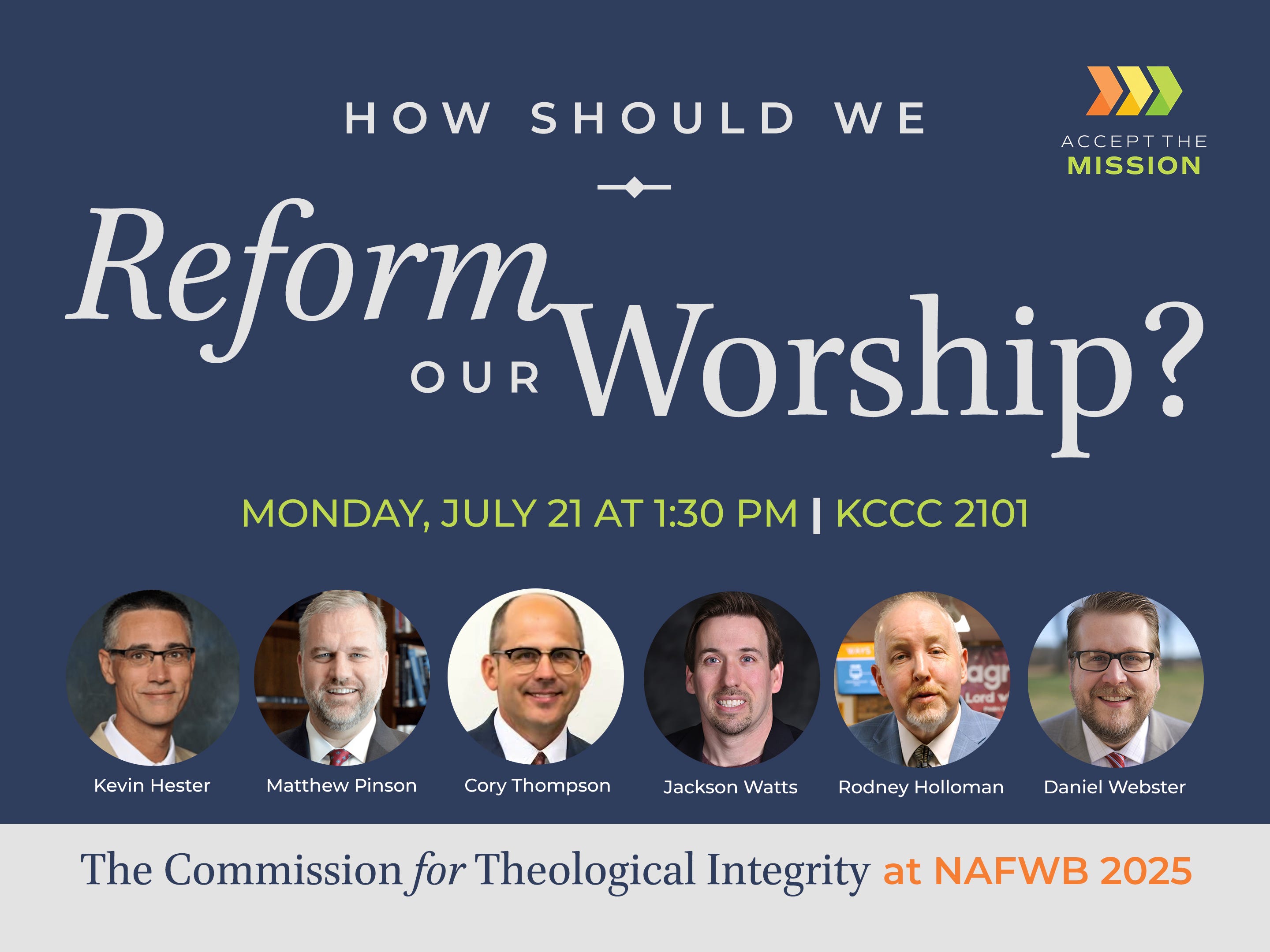
First, I will be participating in a panel this afternoon at the Free Will Baptist National Convention entitled, “How Should We Reform Our Worship?” A big undercurrent in the panelist’s remarks will concern the role of retrieval of the past in reforming our worship today. It’s something I have been thinking about for many years. (Hence, the 2014 paper!)
Second, theological retrieval has been a significant, recent theme in evangelical publishing. Gavin Ortlund’s What it Means to Be Protestant won multiple awards in 2024, yet his is far from the only work touching on themes of renewal through retrieval in recent years.
Additionally, with my being away for the Convention, I offer this “special content” in lieu of the regular newsletter.
All that said, I offer this special, extended post sharing that 2014 paper. I have only edited lightly in places for clarity.
Arguably the dominant social and intellectual feature of the 15th and 16th centuries was the call of ad fontes (lit. to the fountains). This period witnessed a resurgence of interest in Greco-Roman culture as seen in the Greek and Latin sources, as well as interest in classical Christian sources from the Patristic period (roughly the first five centuries A.D.). This return to the sources was precipitated by numerous factors, including the influence of humanists such as Erasmus of Rotterdam, as well as monumental technological developments such as the invention of the printing press. The Greek New Testament of Erasmus may be the single greatest example of the fruit of the ad fontes of this period.
At the same time, many historians also attribute the return to antiquity to other factors—technological advance, distrust toward religious hierarchy, and other forms of social change. Nevertheless, the Renaissance and Reformation both included a number of developments and discoveries, not least of which was a collective interest in the past.
Many have observed that another return to the sources is afoot in the broader Christian community—particularly in evangelicalism. One need look no further than the academic division of InterVarsity Press (IVP) to discover an unprecedented wealth of resources from both the Patristic age as well as the Reformation era being brought to a mainstream readership.
In 1998, IVP published the first volume in the Ancient Christian Commentary on Scripture series (ACCS). This 29-volume set has been met with enthusiasm from many quarters. The project includes engagement with church fathers as diverse as Clement of Rome in the second century to John of Damascus from the mid-eighth century. Individual editors involved with the project include Lutherans, Catholics, Southern Baptists, and scholars from many other traditions. According to series editor Thomas Oden, these volumes are an effort at helping Christians read texts “according to the whole.”[1] He argues, “For evangelicals, a truly catholic reading of Scripture is a reading carried out with the mind of the early church.”[2]
Further evidence that this interest in the tradition is a significant trend as opposed to a fleeting fad are the Reformation Commentary on Scripture series (RCCS) and Ancient Christian Texts series (ACT), both published by IVP Academic. Both projects (still in progress) have been collaborative projects involving scholars from different Christian traditions. The RCCS boasts its own unique array of editors, with Reformation historian Timothy George as its General Editor.[3] The first volume, edited by Gerald Bray, was published in 2011.[4] Presently, five volumes are in print with more on the way.[5] Other evangelical publishers such as Baker Academic (Evangelical Ressourcement series) and Crossway (Theologians on the Christian Life) are engaged in their own parallel “retrieval projects.”[6]
Though a careful analysis of each project’s methodology is worthy of detailed attention, there is perhaps a more fruitful question concerning pastoral practice to be asked: What is the impetus behind this contemporary ad fontes in Christian publishing? Though historically Protestants have emphasized the authority of the Scriptures over the authority of church tradition, a resurgence of interest in classical Christianity, the history of exegesis, and the wisdom of ancient sources is redrawing the lines of what is considered valuable to readers. This subject isn’t just of interest to publishers, but to church historians, book vendors, seminary students, and pastors. For mainstream evangelical publishers to invest so many resources in fresh translations of Clement of Alexandria, Origen, and others, there must be some larger incentive motiving the project. This seems especially true given the willingness of publishers to initiate such large-scale projects in an increasingly “e-book culture.”
The genesis of the Ancient Christian Commentaries on Scripture may shed some light on these developments. General Editor Thomas Oden observes that an increasing number of people teaching pastoral care are
beginning to realize that there is a great viable tradition of therapeutic wisdom in the classical tradition. Similarly, with respect to ethics, the moral teachings of the ancient Christian writers are being rediscovered gradually. I think the ACCS volumes will be used in homiletics courses. I think they will also enter into the study of questions of ethics with regard to particular passages that pose questions of moral responsibility and social justice.[7]
Additionally, Oden has remarked that the idea for the ACCS arose as he was preparing a sermon. He realized that his practice as a theologian of going to pre-modern sources for insight could also be applied to the preaching task.[8]
This perspective will seem counterintuitive to many ministry practitioners. After all, pastoral leadership is perhaps frustrated most often by the phrases “We’ve never done it that way before,” or, conversely, “We’ve always done it this way.” In other words, tradition often seems to be a problematic and counter-productive influence in the life of the church as opposed to an instructive one. Yet the return to the sources transpiring in evangelical literature today seems to signal that there is another way in which tradition can and should be construed for the vibrancy of contemporary church life.
In order for this argument to be instructive and not merely interesting, we must consider the larger cultural currents that have been influencing pastoral practice and the church more generally in recent years. Some of these influences are explicit and obvious, while others remain implicit. However, only by considering some potential influences and the cultural climate in which the contemporary ad fontes is occurring can we better understand the import this has for pastoral theology in the 21st century.
It is my contention that the resurgence of interest in early Christian sources (i.e. the Christian tradition) has been a response to (1) the failed promises of modernity; (2) the desire to confront and engage a postmodern world; and (3) the challenge of navigating the emerging moral-ethical environment in American culture. Such factors suggest that contemporary forays into the Christian tradition can provide potential starting points for pastors and church leaders who desire to situate contemporary faith and practice in the broader cloud of witnesses who have preceded them.
Failed Promises of Modernism
Historians, philosophers, and other cultural observers have debated the exact beginning of the modern period. Some place it as early as the religious and political tumult of the 16th century, while others tie it to the 17th century “cogito” of René Descartes. However, a tentative consensus that can be deduced from recent theological literature suggests that modernity can be seen as the intellectual and social environment of the Enlightenment which came to full fruition in the 19th and early 20th centuries. In this way, modernity is not so much a single ideology confined to specific, demarcated dates, but more of an attitude or posture toward knowledge and human potential that manifested itself in Western thought, practice, and institutions. (While there may be some value in distinguishing modernism from modernity, for our purposes here I will treat them as interchangeable terms which refer to the same intellectual and social phenomena.)
Regardless of the precise definition one posits of modernism or modernity, it certainly refers to an era in which great confidence was placed in the ability of the human subject to comprehend the world and overcome the world. In this way, modernity is constituted by particular orientation to reason and experience (i.e. epistemology), an unbridled optimism about the human condition, and a preoccupation with the prospects of progress. Necessarily, modernity also pushes religious belief to the margins as it has a secularizing (or simply privatizing) effect in many areas of human life.[9] This outlook was translated in various ways into academic disciplines, the arts and humanities in general, as well as religious thought.[10]
In the 20th century, there were many from within the confessional Christian community who attempted to confront the various “isms” associated with modernity, such as Kantianism, Darwinism, Marxism, and Higher Criticism to name a few. J. Gresham Machen may be the most notable biblical scholar/theologian to confront modernism in the first half of the 20th century, followed by C.S. Lewis across the Atlantic in the 1940s, 50s, and early 60s. However, in the mid-late 20th century, the rise of a new culturally-engaged evangelicalism produced a significant number of Christian theologians who expressed doubt, disdain, and even wholesale rejection of the modern project. These numerous critiques which decried modern forms of unbelief (operating under the guise of critical scholarship) may have been correct in the eyes of many.
However, for all the benefit of such criticisms, most indictments did not arise from those who had themselves experienced the bitter disappointments of modernity’s promises. In other words, the most powerful criticisms of an intellectual movement often come from those who once operated from within that movement. Thus, there is one notable critic who was educated and nurtured in modern thought in the late 20th century who has since argued for a direct correlation between modernity’s failures and the intellectual and spiritual potency of classical Christianity. This critic is Wesleyan theologian Thomas Oden, the General Editor of the Ancient Christian Commentary on Scripture.[11]
In a chapter Oden contributed to No God But God, he briefly narrates something of a conversion he experienced during his academic career. He describes himself as being a movement-chaser in the 1950s and 60s. However, through the influence of a colleague (a Jewish colleague no less) he was prompted to read the classical Christian sources. Oden notes that it was through reading a fourth century treatise by Nemesius that it dawned on him that a better critique of “modern narcissistic individualism” could be found in ancient [premodern] wisdom.[12] It was this change in perspective that led him to begin urging his students and readers to flee the modern idols which replace true belief and instead recover the ancient evangelicalism that can “lead to the renewal of evangelical life through the spirit.”[13]
Oden elsewhere describes in detail the failures of modernity and how they have manifested themselves in the intellectual and moral climate in the 20th century. He summarizes by describing what he calls the four defining hallmarks of modernism as (1) autonomous individualism; (2) narcissistic hedonism; (3) reductive naturalism; and (4) absolute moral relativism.”[14] Oden argues that these are the unavoidable outcomes of the kind of intellectual faddism that has characterized so much modern theology. He notes, “[t]he faddism of theology in the past three decades was not accidental—it was necessary if you understand theology to be a constant catch-up process, trying to keep pace with each new ripple of the ideological river.”[15]
The disenchantment with modern theology that Oden and others experienced during the mid-20th century was a by-product of the more general promises and assumptions of modernity that shaped modern expressions of so-called Christian faith and practice. Autonomous individualism, for instance, necessarily renders us all ‘heretics’ who must choose our own belief system as opposed to receiving an inheritance or deposit which the apostolic writers had provided.[16] The very Greek word for tradition (paradosis) signals a “handing over and receiving or a living and active transmission of the church’s preaching.”[17]
Narcissistic hedonism also, in its own way, impoverishes the soul by hindering it from finding its delight in the collective journey of faith that God’s people have been engaged in as sons of Abraham. Reductive naturalism creates an intellectual framework in which a God “out there” cannot speak to people “down here.” Instead, any sense of divinity or spirituality must be viewed in naturalistic terms which can be accounted for using scientific methods and purported rational thought. Revelation is not a valid source of information, and thus is not a reliable source of authority. Theology, if it is to be done at all, can only be done “from below.”[18]
Finally, absolute moral relativism makes it not only difficult, but practically impossible for the church to speak with any cultural authority on what constitutes right or wrong, or human flourishing more generally. Because they speak with the problematic biases of religion, to accept their insights or conclusions would be a form of intolerant imposition.
These characteristics of late modernity are exactly why Oden contends that a new agenda for theology must be advanced. He states,
The agenda for theology at the end of the twentieth century, following the steady deterioration of a hundred years and the disaster of the last few decades, is to begin to prepare the postmodern Christian community for its third millennium by returning again to the careful study and respectful following of the central tradition of classical Christian exegesis.[19]
It is no surprise, then, that just a few years after the publication of After Modernity…What? Oden became involved with the ACCS.
These commentaries provide unique patristic reflection on the Scriptures from a range of sources and editors from numerous Christian traditions. Oden states in the series’ general introduction, “here the interpretive glosses, penetrating reflections, debates, contemplations and deliberations of early Christians are ordered verse by verse from Genesis to Revelation.”[20] In providing such material, the ACCS is attempting to fulfil three goals:
the renewal of Christian preaching based on classical Christian exegesis, the intensified study of Scripture by lay persons who wish to think with the early church about the canonical text, and the stimulation of Christian historical, biblical, theological and pastoral scholarship toward further inquiry into the scriptural interpretations of the ancient Christian writers.[21]
These stated goals clearly reflect a concern for pastoral practice and scholarship, as well as the laity of the church. In a related vision statement, the project coordinators describe their desire to “put the scriptural insights of the ancient Christian exegetes into the hands of pastors, teachers, and lay people all over the world.”[22] The pastoral and catholic spirit of this massive project is evident in terms of the commitment of resources to the project, the ecumenical nature of the project, and its own stated goals. The creators of the ACCS have attempt to respond to what they describe as a “widespread yearning among Christian individuals and communities for the whole, the deep and the enduring.”[23] This yearning, created by the failures of the historical-critical method of interpretation, is thought to be remedied by projects like this one.
The legacy of Thomas Oden and the Ancient Christian Commentary on Scripture series is a significant example of why the failures of modernism have contributed to the recovery of ancient Christian sources. This is not to suggest that there haven’t been other sub-currents within this larger heading that have had a contributing effect. Certainly there have been many trends and groups within many Protestant denominations that could be understood as “renewal movements.” In many instances, liberalized colleges and seminaries that had historically been theologically conservative have been key sites of reclamation and reform. But even these reforms have largely been part of larger reform efforts in church bodies themselves. One here thinks of the “conservative resurgence” in the Southern Baptist Convention in the 1980s and early 90s, or the formation of the Presbyterian Church of America (PCA) in the 1970s. Though examples differ in their specific contours as renewal projects, the trends are certainly visible to consider.[24]
A final contributing influence within the larger rejection of modernity has stemmed from historian David Steinmetz’s now-famous article entitled “The Superiority of Pre-Critical Exegesis.” Published in 1980, Steinmetz argued that the single meaning theory of the text in biblical interpretation was failing precisely because it was wrong. Blaming much of the confusion on the excesses of the historical-critical method, Steinmetz contends that the medieval approach to the Bible, with its emphasis on “levels of meaning in the biblical text,” flourished in the past because it is true, and additionally it “met the religious needs of the Christian community.”[25] While many scholars and theologians reject this hermeneutical approach, several of the concerns Steinmetz raises with the historical-critical method will certainly find quarter among conservative theologians.
Pastors may wonder at the benefit of wading into these particular waters of hermeneutical theory when it comes to appropriating the tradition. Yet the influence of Steinmetz has been significant, especially in post-liberal circles and some evangelical ones as well. Therefore, it warrants mention as it serves as another example of why the failures off the modern project in the arena of biblical interpretation have driven many to ancient and generally pre-modern sources.
Confronting and Engaging a Postmodern World
Just as the literature is plentiful on the historical, philosophical, and social entailments of modernity, so is the case with postmodernism. Explanations vary as to whether or not a distinction between postmodernism and postmodernity is helpful, but the main debate revolves primarily around how the main issue at hand should even be defined. Like modernism (or modernity), we could ask if postmodernism should be primarily understood as a period of time, a worldview, a philosophical mood, a series of cultural artifacts in transition, or some combination of these. For purposes of this paper, I propose that the latter is the best way of surmising how the body of evangelical assessments has sought to name, explain, and confront the challenge of postmodernism.[26]
To think of postmodernism as a challenge is to already reveal the evangelical hand. While some argue that postmodernism is really an extension of modernity (“hyper-modernity”), most tend to treat it as its own unique intellectual and social phenomenon that poses an equal, if not greater threat to the intelligibility of Christian faith. This isn’t difficult to understand given the three-fold emphasis of postmodernism: (1) the cultural situatedness of the subject; (2) a rejection of absolute truth; and (3) a rejection or extreme suspicion toward metanarratives.[27] There certainly are some who are much more sanguine about the prospects of ministry in postmodernism, such as James K.A. Smith of Calvin College. He has edited a series entitled “the Church and Postmodern Culture,” which includes his Who’s Afraid of Postmodernism?: Taking Derrida, Lyotard, and Foucault to Church.[28] Such sympathetic and appropriation projects are something of an anomaly among evangelicals. Yet it is a perspective shared among a number of evangelical scholars that the conditions associated the period known as postmodernity provides a distinct opportunity for Christian faith to flourish.[29]
One of the most significant figures who linked this opportunism to a profound emphasis on antiquity and the Christian tradition is the late Robert Webber. Webber was a professor of ministry at Northern Seminary at the time of his death, but spent much of his teaching career at Wheaton College. Webber’s unique ecclesial and educational background perhaps positioned him as well as anyone to write over 40 books on worship, with special reference to the early church. As the son of a Baptist minister in the 1950s, it wasn’t a surprise that he would pursue his undergraduate studies at Bob Jones University. Yet he went on to earn graduate degrees from Reformed Episcopal Seminary, Covenant Theological Seminary, and later his doctorate from Concordia Seminary.[30] It is doubtless that such ecumenical experiences conditioned him to envision how the diverse history of Christian expression might come together to manifest a vibrant evangelical faith in a postmodern world.
Webber is best known for his four-volume project commonly referred to as the “Ancient-Future series,” which includes an introductory volume, followed by titles on evangelism, spiritual formation, and worship.[31] The introductory volume, subtitled “Rethinking Evangelicalism for a Postmodern World,” best demonstrates Webber’s specific aim:
The fundamental concern of this book is to find points of contact between classical Christianity and postmodern thought. Classical Christianity was shaped in a pagan and relativistic society much like our own. Classical Christianity was not an accommodation to paganism but an alternative practice of life. Christians in a postmodern world will succeed, not by watering down the faith, but by being a countercultural community that invites people to be shaped by the story of Israel and Jesus.[32]
Webber proceeds to explain his method or approach by inviting his readers to consider the paradigm shift that has transpired in the last several decades, which forces them to think about their engagement with the world in new ways. He argues that Christianity has always found a way to thrive by wrestling with its surrounding culture, though at times it has struggled. Webber wants to position himself among those who will “carefully and cautiously seek to interface historic Christian truths into the dawning of a new era.”[33]
Webber explains numerous areas of Christian thought and life which must be impacted by his proposal, including Christology, ecclesiology, worship, spirituality, and how the church conceives of its mission altogether. Webber doesn’t seek to baptize all the facets of more radical forms of postmodernism, but he is optimistic about the prospects of ministry under such conditions. He exhibits a profound confidence in the Christian tradition, namely the early church, as a resource for informing and connecting the Christian message to the postmodern climate of today. Some of the features peculiar to early church life, such as its use of symbols, its emphasis on mystery, and its unique concern for community resonate quite well with the sensibilities of postmoderns. His suggestion then is not for a “mere historical restitutionism, but a serious application of classical thought to a postmodern world.”[34]
As one reads Webber, they discover that his opportunistic attitude toward postmodernism is driven by three factors: (1) The overly rationalistic tendencies of Christianity in recent centuries; (2) A deep appreciation for the wisdom found in early church thought and practice; and (3) The profound significance of narrative for intellectual, spiritual, and ecclesial vitality.
Webber’s criticism of the rationalistic tendencies in Western Christianity is not a novel critique. It is one that has been made by numerous authors, especially those who have tried to demonstrate how modernism impacted the formulation of Christian apologetics and theology during the Enlightenment. Webber’s argument is that because postmoderns are more accepting of mystery and other categories which play on the more subjective aspects of human experience, Christians should recover the early church’s “language of liturgy” and other qualities which are free from many of the trappings of modernism. This, he believes, is one of the distinct contributions that the ancient church can make to the “future church.”
One may recall earlier that most evangelical appraisals of postmodernism emphasize its suspicion (or “incredulity,” to use Lyotard’s word) toward metanarratives. Instead, it emphasizes the individual narratives or stories of particular communities, and how those communities seek to understand their identity through learning the grammar of their community and embodying that in particular practices (Here one cannot help but think of George Lindbeck's “cultural-linguistic” approach to doctrine found in The Nature of Doctrine). But Webber doesn’t want to shed the universal quality of the Christian story, nor even deny that it is, in fact, a metanarrative. He believes that a focus on story is significant for churches in postmodernity.
In an edited volume on the emerging church movement, he argues that emerging church leaders are trying to help younger evangelicals embrace a Christianity that isn’t driven by need or private interest, for this misse[s] the point of biblical and historic Christianity.[35] The emerging church, he believed, was “the first gasp of evangelicalism in the postmodern world.”[36] We can only speculate as to whether Webber would have appreciated all the permutations of this movement following his death in 2007, but it is in his later work that the connections between worship, the early church, and cultural relevance are forged. Understanding the storied nature of Christianity was a significant part of this nexus, and Webber believed that the early church provided the necessary resources to help contemporary Christians navigate postmodern times.
Navigating the Emerging Moral-Ethical Environment in America
Modernity and postmodernity do not exist as mere philosophical notions to be analyzed by concerned Christians. Even if they could be relegated to the realm of ideas (a dubious claim to be sure), they have tangible manifestations in the practices and processes of contemporary culture. The moral relativism that accompanies such powerful cultural winds creates a complex milieu within which Christians will minister. Reflecting on this dynamic, one theologian in the Baptist tradition remarks,
When it comes to morality and ideals, the culture that I was brought up in did a better job of training people than the church does now…I do not want to leave the impression that everyone was a shining example of all of these virtues. Some were not…There were differences of opinion on the finer points of the application in moral areas, but there was no conflict on the basic morality of the Ten Commandments.[37]
While one might be quick to dismiss such a remark as a nostalgic longing for cultural Christianity, it does seem to map onto the actual experiences of many Christians who have lived through the better part of the 20th century.
Over the last several decades Christians have encountered a host of moral and ethical concerns which, for many, have occurred at a breathtaking pace. Many of these issues have been made possible by technological advances (e.g. stem-cell research), while others relate more to collapsing plausibility structures as it concerns sexuality and rights (e.g. the legalization of same-sex marriage). Such circumstances have produced a flurry of activity among evangelicals, especially as many local churches and parachurch organizations attempt to prepare for the implications of such changes. But this activity involves much more than the formation of fresh apologetic arguments or the revision of church constitutions and by-laws. There is a number of emerging alliances that constitute significant ecumenical efforts to confront the changing ethical and moral situation in America. And, such alliances have driven many “to the sources” as well.
One of the most recent examples of such alliances is the Manhattan Declaration (MD). The MD is a 4,700-word document which addresses three key subjects: the sanctify of life, marriage, and religious liberty.[38] It was authored in 2009 by a group of Protestants (mostly evangelicals), Catholics, and Orthodox Christians. The original drafters include the late evangelical leader Charles Colson, Princeton professor Robert P. George (Catholic), and Beeson Divinity School Dean and Reformation historian Timothy George (Southern Baptist). Signatories include presidents and deans of seminaries, Catholic Archbishops, prominent pastors, and bestselling authors. To date, over a half a million persons have signed the Declaration.
It isn’t necessarily a novelty to see a coalition of American religious groups like that the one seen in the MD. Assorted religious groups have been brought together for other social and political causes in the past, such as the Moral Majority and Evangelicals and Catholics Together. However, the explicit appeals to the Christian tradition in the wording of the MD reveals that responding to contemporary moral and ethical challenges requires more than simply what is found in a single slice of any single Christian tradition in modern times. Ecumenical and ancient wisdom is necessary.
Timothy George illustrates the ecumenical nature of this response in the postscript. This document, he says, “represents an ecumenism of conviction, not an ecumenism of accommodation.”[39] By this, he seems to mean that the MD constitutes not simply a pragmatic stab in the darkness, but a spiritually-motivated alliance. But the sources which inform and shape this alliance are of interest here.
First, there is an explicit framework of reflection within what is described as the “Christian tradition.” In many instances this very phrase appears as a means of justifying the view being advanced, including its description of marriage as “holy matrimony.”[40] The drafters of the Declaration recognize that the “traditional Christian sexual ethic seen in both Roman Catholic and Protestant Christianity” enables them to find common ground, even on a subject where differences do exist.[41] More generally, the example of the early church is invoked with reference to their response to widespread infanticide in Roman society,[42] as well as their treatment of the sick and dying during the plagues.[43] In making such observations, the drafters of the Declaration recognize, as Robert Webber puts it, that “[c]lassical Christianity was shaped in a pagan and relativistic society much like our own.”[44] This led to many forms of moral decay in the ancient world as it also has in our own day.
A second significant feature of the Declaration is its appeal to observations rooted in social science, and natural law language more generally. The opening paragraph of the document states, “We set forth this declaration in light of the truth that is grounded in Holy Scripture, in natural human reason (which is itself, in our view, the gift of a beneficent God), and in the very nature of the human person.”[45] One observes here the inclusion of human reason as a source of moral authority, which, at times, Protestants have been wary of appealing to. They expand on this source when further explaining the vision of marriage which they contend for:
Vast human experience confirms that marriage is the original and most important institution for sustaining the health, education, and welfare of all persons in a society. Where marriage is honored, and where there is a flourishing marriage culture, everyone benefits…Where the marriage culture begins to erode, social pathologies of every sort quickly manifest themselves.[46]
This reasoning from natural observation and experience characterizes the document in other places as well. However, this is not at the exclusion of explicit use of early church figures. Diognetus, the second century apologist is cited to justify the view of religious liberty which is advanced in the Declaration.[47] Generally though, the clearest connection this document shares with what we would think of as theological retrieval projects is its constant appeal to the moral consensus found in the history of Christian thought, and then more specifically the authority of natural law.
The emphasis on natural law is significant since it has often been a point of sharp division among Catholics, Protestants, and the Orthodox. However, as Paul Snell explains,
Protestant interest in natural law has revived, aided by an easing of suspicions toward Catholicism, ressourcement within evangelicalism, political engagement by evangelicals in need of a social theory, and historical scholarship on the Reformers’ comfort with natural law.[48]
By ressourcement, Snell is referring to a term “coined by French Roman Catholic writers in the mid-twentieth century as descriptive of theological renewal that declared Christians must return to the sources (ad fontes) of the ancient Christian tradition.”[49] Timothy George, General Editor of the Reformation Commentary on Scripture series, has also emphasized the significance of this term in his work. Snell argues that in the drafting process of the Manhattan Declaration “some signatories encountered resistance, with critical handwringing about cozying-up to the natural law.”[50] Yet in the end it is evident that the threats to human dignity, as well as other pressing social issues, has led to a greater ecumenical consensus (at least in key instances) about the practical use of natural law as it is embodied in the larger Christian tradition.
Pressing ethical challenges have indeed reframed the way many Christians are viewing ecumenical alliances. Robert Webber’s later work, as seen in Who Gets to Narrate the World?, is perhaps the best example of a call for the entire Christian communion to rally together if they are to “contend for the Christian story in an age of rivals.” He laments the fact that Orthodox, Catholics, and Protestants groups too “often emphasize how and why [they] differ and even fight over [their] differences.”[51] “However,” he says,
given the world situation and the new anti-Christian contenders to the narration of the world—especially Radical Islam—it is urgent that we come together. I don’t mean in an organized, institutional way, but spiritually, through our common tradition: God’s narrative.[52]
Not only does Webber call for this unity in light of the agenda of Radical Islam, but he is also concerned about how the turn to the self (as alluded to above), is “opening up the doors for all kinds of things that haven’t been considered acceptable since the Roman Empire, such as sexual immorality like homosexuality.”[53] He further explains,
Personal morality has undergone a revolution. While statistics are not available, I believe that personal moral behavior in the West is about where it was in Rome when Christianity first appeared. Premarital sex, adultery, pornography, homosexuality and even bestiality are quite common. The sexual revolution has deeply affected the family, is breaking down marriage and is undermining the stability of society.[54]
Webber sees his work as a “postmodern apologetic” whose key aim is to emphasize the need for all Christian traditions to recover the larger biblical tradition, especially the narrative of Jesus, and allow this narrative to once more shape the church in the face of such difficult times.[55]
Redeeming Tradition for Pastoral Theology
This paper argues for why the most recent ad fontes in the Christian community is taking place. The failed promises of modernity, the desire to confront a postmodern world, and the need to navigate the emerging ethical and moral environment in America have been the most significant contributing forces to this trend.
Even as we acknowledge these recent trends and their antecedents, it is important that we don’t overstate them. As Ken Stewart has pointed out, while there is certainly evidence of renewed interest in early church thought, there is also a plethora of evidence which demonstrates a steady engagement with patristic thought since the Reformation in the Protestant evangelical community. In an Evangelical Quarterly article, Stewart helpfully reminds readers of a number of notable forays into the past, as well as seasons of retrieval during the last five centuries. He essentially argues that the recent resurgence of interest in the past isn’t as novel as some have suggested.[56]
However, even if we consider these recent retrieval efforts as more of an occasional riptide in history’s ocean, as opposed to a tsunami which alters the landscape entirely, it is still instructive to pastors and ministry practitioners of all kinds. Most of them enter the ministry with some conviction about the value of church history and its ability to inform and guide belief and practice. Yet in many cases they are swiftly confronted with instances where “tradition” has adversely shaped the life of their church. In other instances it seems that “tradition” is simply considered irrelevant for guiding the church’s life altogether. How then may recent theological retrieval projects contribute to contemporary pastoral theology in a meaningful way? Here let me offer three proposals.
First, as in every successful dialogue, terms and concepts must be given some clear definition. A term like “tradition” has the ability to be as elastic as any Christian may desire it to be. It may refer to the local customs of a specific people, or it may span a much larger swath of time which then includes a range of practices and beliefs. Depending on the parties discussing their existing beliefs and practices, it could easily be that the reason the authority of tradition is contested is because tradition itself is a contested or misunderstood concept. I would suggest that pastors themselves first adopt a clear understanding of what is entailed in the term and concept of tradition, and begin from there in teaching the historical, theological, and spiritual significance of this.
Second, as an extension of the first proposal, “tradition” can most helpfully be construed as operative on three levels. There is (1) Local Tradition, (2) Ecclesial Tradition, and (3) the Great Tradition. One can certainly adopt their own terminology, but I would argue that these are three levels which constantly inform the life and practice of any church. Local traditions refer to those which are particular to a given congregation. They are the ways that believers in a specific church have thought of and embodied their faith. These have perhaps more spiritual significance than anything else as they are the faith as those congregants know it. Pastors then must sensitively and biblically evaluate the nature of those local traditions so as to shepherd the flock carefully away from destructive traditions and more deeply into spiritually significant ones, or to shepherd them more deeply into their existing traditions, assuming they are Scripturally-based.
Naturally levels 2 and 3 come into view as they call individual congregations back into their own larger heritage, whether it be Baptist, Methodist, Presbyterian, and something else. Their identity is bound up in some way with this larger tradition, and thus it must not be overlooked in favor of local traditions which are informed by a much more limited period of understanding and inhabiting the faith. The third level is, of course, the level that this paper largely has in view. It is that great cloud of witnesses which consists of 2,000 years of teaching, living out, and contending for the faith. Local churches and even larger ecclesial traditions can better understand their identity, mission, and connections with the larger Christian family if they will allow themselves to appreciation the universal nature of the church as it is described in many of the ecumenical creeds and confessions.
My third and final proposal is in reality embedded in the second proposal. Congregants must be taught to understand and embrace the practical wisdom found in historical consensus. Scripture reminds us that in the multitude of counselors there is safety. However, often the historical location of those counselors effectively curtails our willingness to hear them today. We slip into the type of chronological snobbery which C.S. Lewis warned about in God in the Dock. Another unique apologist earlier in the 20th century, G.K. Chesterton, wrote of the “democracy of the dead” which was significant in his pseudo-apologetic project Orthodoxy. The idea that the dead may and should speak to the living is one which is difficult for many to appreciate, whether they style themselves as “modern” or “postmodern.” Yet the New Testament writers often draw their audiences’ attention back to the examples from the past in order to inform and order their belief and practice. Likewise, pastors today must enable their flock to understand the spiritual significance of the Christian past. While not all retrieval projects will look the same, churches which are purposely engaged in the work of retrieval may find that the past will better help them understand their present, and direct them to a better future.
[1] “An Interview with Thomas Oden, General Editor, ACCS,” accessed on 25 March 2014, https://www.ivpress.com/accs/oden.php
[2] Ibid.
[3] Timothy George, Reading Scripture with the Reformers (Downers Grove, IL: IVP Academic, 2011).
[4] Interestingly, Bray has also edited the James-Jude (vol. 11) of the Ancient Christian Commentary on Scripture series as well.
[5] John 1-12 was the most recently-released volume.
[6] The Baker series consists of four volumes presents, while Crossway’s includes 11 volumes.
[7] https://www.ivpress.com/accs/oden.php accessed on 25 March 2014.
[8] Ibid.
[9] The secularization thesis, first advanced by sociologist Peter Berger, certainly has appeared to be accurate in reference to the European context, though in America the thesis has undergone significant revision.
[10] Manifestations in this latter area include existentialism, process thought, and liberation theology, to name a few.
[11] Though I draw from different sources concerning Oden, readers should be aware that Oden’s memoir was published in recent weeks entitled A Change of Heart: A Personal and Theological Memoir (IVP Academic, 2014).
[12] Thomas Oden, “On Not Whoring After the Spirit of the Age,” in Os Guinness & John Seel, eds. No God But God: Breaking with the Idols of Our Age (Chicago: Moody Press, 1992), 190-191.
[13] Ibid., 191.
[14] Oden’s developed critique of modernity can be found in After Modernity…What? Agenda for Theology (Grand Rapids: Zondervan Academic, 1990), 43-57.
[15] After Modernity, 32.
[16] This argument is advanced in part by sociologist Peter Berger in The Heretical Imperative; Contemporary Possibilities of Religious Affirmation (Garden City, NY: Anchor Press, 1979).
[17] D.H. Williams, Evangelicals and Tradition: The Formative Influence of the Early Church (Grand Rapids, MI: Baker Academic, 2005), 33.
[18] Sometimes “theology from below” is described as a way of doing theology that begins with the experiences of the individual in the world, and then moves to or through the Scriptures from there. In the most basic way, one can see that there is a way in which faithful theology can and perhaps should be done in this way. On the other hand, some have understood and practiced “theology from below” as a glorified project of developing doctrine solely on the basis of what makes intelligible their experience.
[19] After Modernity, 34.
[20] “General Introduction,” accessed on 17 November 2014, http://www.ivppress.com/title/exc/1470-I.pdf
[21] Ibid.
[22] “ACCS Translations Project,” accessed on 17 November 2014, http://www.ivpress.com/accs/translations.php
[23] “About the Ancient Christian Commentary on Scripture,” accessed on 17 November 2014, http://www.ivpess.com/accs/about.php
[24] Another contribution of Oden’s worth attention to further substantiate the narrative I have provided in this section include his chapter “The Faith Once Delivered,” in Evangelicals and Nicene Faith: Reclaiming the Apostolic Witness, Timothy George, ed. (Grand Rapids, MI: Baker Academic, 2011).
[25] David C. Steinmetz,” The Superiority of Pre-Critical Exegesis,” Theology Today 37 (1980): 27-38.
[26] Roger Lundin, The Culture of Interpretation: The Christian Faith and the Postmodern World (Grand Rapids: Eerdmans, 1993); Gene Edward Veith, Postmodern Times: A Christian Guide to Contemporary Thought and Culture (Crossway, 1994); Richard Middleton and Brian Walsh, Truth is Stranger than it Used to Be: Biblical Faith in a Postmodern World (Downers Grove, IL: InterVarsity, 1995); Dennis McCallum, ed. The Death of Truth: What’s Wrong with Multiculturalism, the Rejection of Reason and the New Postmodern Diversity (Grand Rapids, MI: Bethany House, 1996); David Dockery, ed. The Challenge of Postmodernism: An Evangelical Engagement (Grand Rapids: Baker Academic, 1995); Millard Erickson, Postmodernizing the Faith: Evangelical Responses to the Challenge of Postmodernism (Grand Rapids, MI: Baker, 1998); Douglas Groothuis, Truth Decay: Defending Christianity Against the Challenges of Postmodernism (Downers Grove, IL: IVP Books, 2000); Millard Erickson, Truth or Consequences: The Promise & Perils of Postmodernism (Downers Grove, IL: IVP Academic, 2001); Stanley Grenz & John Franke, Beyond Foundationalism: Shaping Theology in a Postmodern Context (Louisville: Westminster John Knox Press, 2000); Robert C. Greer, Mapping Postmodernism: A Survey of Christian Options (Downers Grove, IL: InterVarsity Press, 2003); Erickson, Helseth, Taylor, eds. Reclaiming the Center: Confronting Evangelical Accommodation in Postmodern Times (Wheaton, IL: Crossway, 2004);
[27] I should acknowledge that while I did not adopt this list from a specific source, my years of reading evangelical assessments of postmodernism give rise to this summary of those sources.
[28] Published by Baker Academic in 2006.
[29] It is additionally significant that Smith has authored Introducing Radical Orthodoxy: Mapping a Post-Theology (Grand Rapids, MI: Baker Academic, 2004). Here Smith describes another significant theological community which is especially interested in “returning to decidedly premodern sources.” (43)
[30] “Robert E. Webber, Theologian of ‘Ancient-Future’ Faith, Dies at 73,” accessed on 17 November 2014, http://www.christianitytoday.com/ct/2007/aprilweb-only/118-12.0.html
[31] cf. Ancient-Future Faith: Rethinking Evangelicalism for a Postmodern World (Grand Rapids, MI: Baker Books, 1999); Ancient-Future Evangelism: Making Your Church a Faith-Forming Community (Grand Rapids, MI: Baker Books, 2003); Ancient-Future Time: Forming Spirituality through the Christian Year (Grand Rapids, MI: Baker Books, 2004); Ancient-Future Worship: Proclaiming and Enacting God’s Narrative (Grand Rapids, MI: Baker Books, 2008);
[32] Ancient-Future Faith, 7
[33] Ibid., 14.
[34] Ibid., 12.
[35] Robert Webber, ed. Listening to the Beliefs of Emerging Churches: Five Perspectives (Grand Rapids, MI: Zondervan, 2007), 15.
[36] Listening to the Beliefs of Emerging Churches, 9.
[37] F. Leroy Forlines, The Quest for Truth: Theology for Post Modern Times (Nashville: Randall House, 2001), 19.
[38] All references to this document come from a 2012 edition published by Life Books, LLC.
[39] Manhattan Declaration, 71.
[40] Ibid., 40, 45.
[41] Mark Yarhouse, Homosexuality and the Christian: A Guide for Parents, Pastors, and Friends (Minneapolis: Bethany House, 2010), 24.
[42] Manhattan Declaration, 19.
[43] Ibid., 25-26.
[44] Robert Webber, Who Gets to Narrate the World? Contending for the Christian Story in an Age of Rivals (Downers Grove, IL: IVP Books, 2008), 7.
[45] Manhattan Declaration, 29.
[46] Ibid., 40.
[47] Ibid., 50.
[48] Paul Snell, “Protestant Prejudice,” The City (Winter, 2013): 22.
[49] D.H. Williams, 9.
[50] Snell, 22.
[51] Who Gets to Narrate the World? 117.
[52] Ibid.
[53] Ibid., 41-45.
[54] Ibid., 92.
[55] Ibid., 135. Webber has also co-authored his own “declaration” of sorts, along with Phil Kenyon of Northern Seminary. It was drafted in 2006, and is called “A Call to an Ancient Evangelical Future.”
[56] Kenneth J. Stewart, “Evangelicalism and Patristic Christianity: 1517 to the present,” Evangelical Quarterly 80.4 (2008), 207-321.